Unexpected situations can arise at any moment on the road: a flat tire on the highway, an accident, an inspection, or simply a difficult winter morning with the vehicle. Anyone who regularly drives a truck knows that having the right tools is not a luxury but a basic necessity. A missing fire extinguisher or a poor-quality tire repair kit can cost not only money but also days. This article will guide you through mandatory equipment to comfort accessories, helping you assemble the tool kit that will truly prepare you for the road.
Table of Contents
- The Most Important Safety and Mandatory Tools for Truckers
- Useful, but Not Mandatory: Comfort and Maintenance Tools
- Comparison Table: Which Tool is for What?
- Quick Tips for Choosing the Ideal Trucker Tool Kit
- What Do Most Truckers Misjudge When Choosing Tools?
- Shop for Quality Trucker Tools Conveniently
- Frequently Asked Questions
Key Takeaways
| Point | Details |
|---|---|
| List of Mandatory Equipment | Basic safety equipment is a legal obligation and essential for protection. |
| Comfort and Maintenance Solutions | Using extra tools can save time and energy on the road. |
| Conscious Kit Assembly | A tool kit tailored to personal needs enhances safety and increases efficiency. |
| Online Shopping Opportunities | Necessary tools can be conveniently purchased from one place via an online store. |
The Most Important Safety and Mandatory Tools for Truckers
Before we consider anything else, let's be clear: regulations don't ask, they demand certain equipment from all heavy-duty vehicles. During inspections, insufficient equipment can result in significant fines, and more importantly, in the event of an accident, missing equipment can endanger human lives.
The list of mandatory equipment should be familiar to every truck driver: first-aid kit (Type B/C), fire extinguisher (1-6 kg ABC or grenade type), eye wash solution, ADR equipment for transporting dangerous goods, and non-slip tape. These are not optional.
The requirements for first-aid kits precisely specify the contents the box must have. Not just any box will do: there is a serious difference between Type B and Type C first-aid kits in terms of quantity and composition of contents. For heavy-duty vehicles, Type C is generally expected, but this also depends on the vehicle category and national regulations.
What should you pay particular attention to when purchasing mandatory equipment?
- Expiration Date: Fire extinguishers and the contents of first-aid kits must be checked regularly. Many drivers only notice expired equipment when it's too late.
- Certifications: Only purchase CE-marked, standard-compliant products. Cheap, unknown brands of equipment are not acceptable during inspections.
- ADR-specific Equipment: If you transport dangerous goods, ADR regulations also contain specific requirements for the size and type of fire extinguisher.
- Placement in the Vehicle: Mandatory equipment must be kept in an easily accessible place, not buried deep in the cargo area.
“The most common mistake we see: the driver buys the mandatory equipment but doesn't check it for years. An expired fire extinguisher is just as bad as having none at all."
Choosing a first-aid kit is also not a simple task if you don't know the differences between the various types. It's worth researching thoroughly before buying, as not all boxes comply with the stricter regulations for heavy-duty vehicles. A quality first-aid kit is not just a regulatory obligation to be met on paper, but can also be genuine help at the scene of an accident.
A typical mistake many transporters make: they buy the mandatory equipment once and then don't deal with it for years. The pressure in the fire extinguisher drops, the contents of the first-aid kit expire, the eye wash solution freezes in winter. These are all avoidable problems if you go through the list once every six months.
Useful, but Not Mandatory: Comfort and Maintenance Tools
You have the mandatory equipment, but you're still far from prepared for everything. Experienced truck drivers know that daily work is actually made easier by tools that are not listed in any regulation.
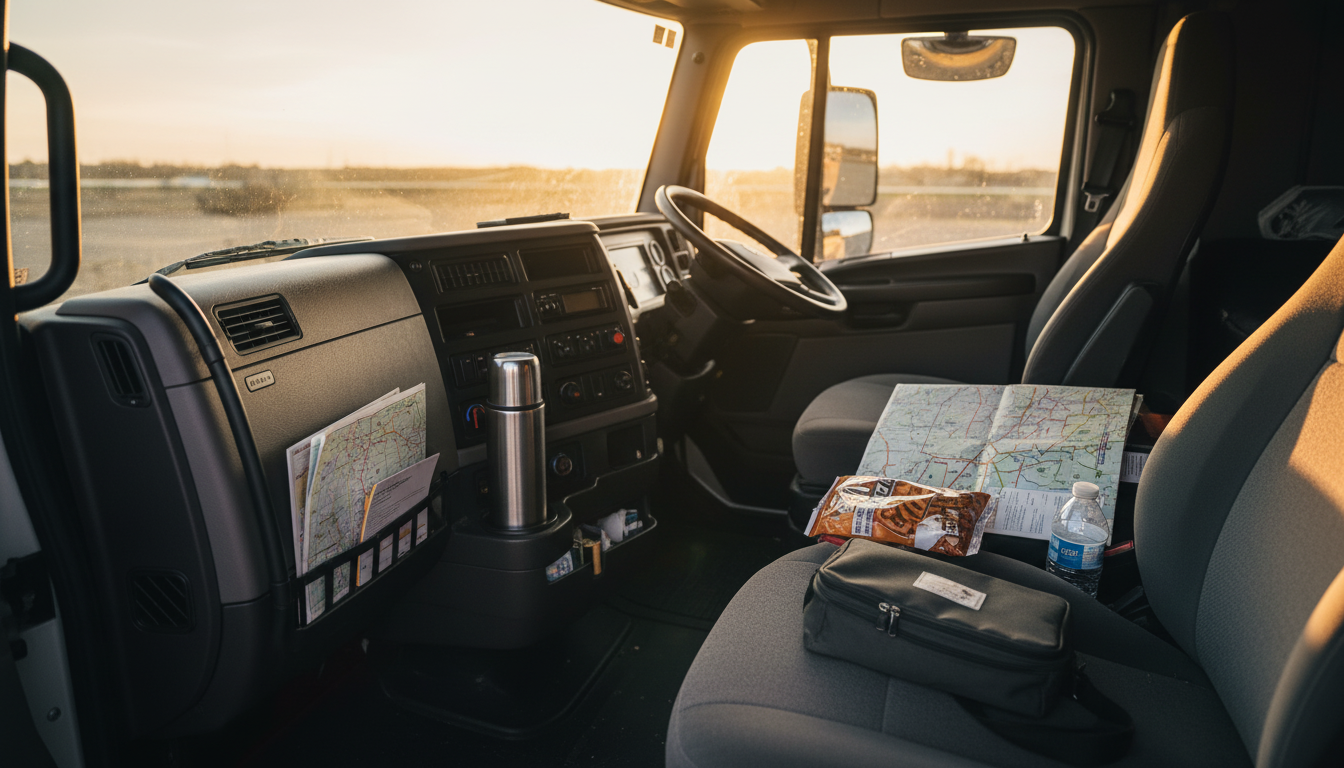
Safety, maintenance, and comfort tools together make everyday life smoother and save a lot of time and money in the long run. Just think: without a tire repair kit, even a minor tire problem can take hours, while with the right tool, it can be solved in twenty minutes.
Which are the most sought-after comfort and maintenance tools?
- Windshield Wipers and Brushes: Essential in winter. A good quality, long-handled brush and a strong ice scraper make morning starts much faster. Short, cheap versions break quickly and cannot reach the top of the windshield in a higher cabin.
- Tire Repair Kit for Heavy-Duty Vehicles: Not every flat tire immediately requires a tire fitter. A kit equipped with a compressor and sealant can save the day even on the highway until you reach the next service point.
- Car Shampoo and Maintenance Set: Keeping the vehicle clean is not just an aesthetic issue. Dirty windshields, grubby rearview mirrors, and soiled headlights pose a direct risk of accident.
- Portable Vacuum Cleaner and Interior Cleaner: On long hauls, the cabin quickly fills with dust, crumbs, and other debris. A small cordless vacuum cleaner works wonders.
- Comfort Accessories: Special truck driver towel, neck pillow, blackout curtains. These may seem like minor things, but anyone who spends days in the cabin knows how much they matter.
When choosing practical accessories, always consider the type of transport you perform. A short, urban hauler will require different tools than someone who drives thousands of kilometers weekly.
Pro Tip: Don't buy everything recommended at once. Start with the most frequently used tools and expand your kit based on experience. A rarely used tool only takes up space, but a missing tool that's needed daily can cause serious problems.
Comparison Table: Which Tool is for What?
Different tools provide value in different situations. A comparative approach helps you decide what you really need, so you don't unnecessarily spend money on tools that will never be used in your specific work environment.
| Tool | Main Function | Mandatory? | Typical Price | Best in Situation |
|---|---|---|---|---|
| First-aid kit (Type C) | Treating injuries | Yes | 3 000-8 000 Ft | Accident, injury |
| Fire extinguisher (ABC) | Extinguishing fire | Yes | 5 000-15 000 Ft | Engine compartment fire, cargo fire |
| Eye wash solution | Treating eye injuries | Yes | 500-1 500 Ft | Chemicals, dust in eye |
| Non-slip tape | Slip protection | Yes | 1 000-3 000 Ft | Wet, icy surfaces |
| Tire repair kit | Tire repair | No | 8 000-25 000 Ft | On highway, far from service |
| Windshield brush, ice scraper | Windshield cleaning | No | 1 500-4 000 Ft | Winter morning start |
| Car shampoo, maintenance | Vehicle cleaning | No | 2 000-6 000 Ft | Regular maintenance |
| Trucker towel | Personal hygiene | No | 2 000-5 000 Ft | Long haul, rest stop |
The table clearly shows that the price of mandatory equipment is relatively low, yet many people skimp on it, buying cheaper, lower-quality versions. This is not a cost-effective strategy in the long run.
What else should be considered when choosing tools?
- Storability: A truck cabin has limited space. Choose compact, easily storable tools that don't take up unnecessary room.
- Durability: Cheap tools break down quickly, especially under extreme temperature conditions. A quality tire repair kit lasts for years, while a cheap one gives up after one or two uses.
- Compatibility: Some tools, such as compressors, are only suitable for certain tire sizes. Check that the chosen tool actually fits your vehicle.
The effectiveness of safety equipment cannot only be measured on paper: a driver equipped with the right tools reacts faster and more effectively in unexpected situations, directly reducing the risk of accidents.
Quick Tips for Choosing the Ideal Trucker Tool Kit
Now that you know the main tool groups and their functions, it's time to assemble your own kit. The right tool kit significantly contributes to accident prevention and is a worthwhile investment in the long run.
How do you assemble a truly useful kit?
- Determine Your Type of Work: Short, urban hauling demands completely different needs than international long-haul. For the former, quick maintenance and flexibility are key; for the latter, self-sufficiency and long-term comfort.
- List Mandatory Items: First, ensure you comply with all legal requirements. This is the foundation upon which everything else is built.
- Consider the Seasons: In winter, different tools come to the fore (ice scraper, non-slip tape, winter fluids); in summer, different problems arise (cooling, dust removal, UV protection).
- Consider the Route: If you regularly travel to areas with less developed infrastructure where services are scarce, a tire repair kit and basic mechanical tools are more important.
- Test and Refine: The first kit will never be perfect. After a month or two, you'll know what's missing and what you've never used.
Pro Tip: Keep a simple list of what tools you needed in what situations over the past year. This database will give you a much more accurate picture of your actual needs than any general recommendation.
Among the practical tips for drivers, one of the most important is: don't leave equipment maintenance until the last minute. Review your entire kit every six months, check expiration dates, and replenish what's necessary. The trucker tips blog is regularly updated with useful information to help you stay up-to-date.
Typical mistakes to avoid:
- Deciding solely based on price, without considering quality
- Not checking the condition of mandatory equipment for years
- Buying everything at once, then realizing half of it is useless
- Ignoring seasonal needs
What Do Most Truckers Misjudge When Choosing Tools?
Based on twenty years of experience, we can say: most transporters view tool selection as a one-time task. They buy the mandatory equipment, check off the list, and don't deal with the topic for years. This attitude is what is actually dangerous.
The other big misconception: many people believe that more expensive tools are automatically better. This is not always true. A well-chosen, moderately priced tire repair kit often performs better than a premium brand product that is not compatible with the specific tire size. The price-quality ratio is only meaningful if you know exactly what you will need.
In terms of comfort accessories, most drivers underestimate how much personal comfort matters on long hauls. A tired, uncomfortable driver is more accident-prone than a well-rested one. Tools therefore influence not only the vehicle but also the driver's performance.
Shop for Quality Trucker Tools Conveniently
If you've read this article, you already know what you need. The next step is to acquire these tools, preferably from a reliable source where everything can be found in one place.
At Convoy.hu, we stand behind transporters and truck drivers with over 30 years of experience. You'll find everything you need, from mandatory equipment to trucker towels and tire repair kits. Ordering is simple, delivery is fast, and if you have any questions, our expert team will help you choose. Check out the full range on the Convoy.hu webshop and assemble your perfect tool kit today.
Frequently Asked Questions
What are the most important mandatory tools in a truck in 2026?
At least a first-aid kit (Type B/C), fire extinguisher, eye wash solution, ADR equipment, and non-slip tape are required in every heavy-duty vehicle. The absence of these can lead to fines during inspections and more severe consequences in the event of an accident.
What comfort tools are also worth acquiring?
Recommended items include a windshield cleaning brush, car shampoo, a tire repair kit, and a special trucker towel, all of which improve daily maintenance and comfort on long hauls.
How do I choose a tool kit for my work?
It's worth selecting based on the route, the type of goods transported, and working conditions: when assembling the right tool kit, always start from your real, daily needs, not just general recommendations.