A tinplate toy truck gathering dust in an attic could be worth tens of thousands of forints today, and that's no exaggeration. The price of retro truck models has increased up to 17-fold in the past decades. Many people don't even realize that a metal toy hidden deep in their grandparents' closet could be circulating in a serious collector's market. In this article, we'll show you what truly counts as a truck collectible, what makes its value increase, and how nostalgia has reshaped this entire market. We'll cover historical background, market trends, emotional attachment, and how you can embark on your collecting journey.
Table of Contents
- What does the concept of a truck collectible mean?
- The impact of nostalgic value and market trends
- What influences the value of truck collectibles?
- How to start collecting truck memorabilia?
- Why isn't the value of truck collectibles just about money?
- Collector's experience in a modern environment
- Frequently Asked Questions
Key Takeaways
| Point | Details |
|---|---|
| The concept of a collectible | Models, toys, or relics associated with trucks can all be collectibles if they have nostalgic value. |
| The price-increasing effect of nostalgia | Due to emotional attachment, the price of certain old models has multiplied in recent years. |
| Value-increasing factors | Original condition, brand, rarity, and patina significantly determine collector's value. |
| Practical collecting tips | Acquisition sources, authenticity verification, and community knowledge are all important for successful collecting. |
What does the concept of a truck collectible mean?
At first glance, the word collectible might evoke museums or antique shops, but the reality is much closer to us. A truck collectible refers to any item related to a specific truck type, brand, or era that has collector's, emotional, or cultural value. This could be a precisely crafted metal model, a tinplate toy from the Soviet era, a souvenir with a factory emblem, or even an original driver's manual.
The most sought-after categories include:
- Metal model trucks (in 1:43, 1:64 or 1:34 scale)
- Tinplate toy trucks (Soviet, East German, or Hungarian made)
- Factory promotional items (emblems, keychains, caps, calendars)
- Original parts for collecting purposes (e.g., gear knob, steering wheel)
- Posters and brochures from old manufacturers
What makes an item a collectible? Three things are needed: emotional attachment, historical significance, and some uniqueness. A Rába or Tatra truck model is not just a toy, but a snapshot of an era when these vehicles were the pride of socialist industry.
"A true collectible is not just an object, but a bearer of history, connecting the past with the present."
The collector's community is also an important aspect. In Hungary, there are numerous clubs and exhibitions where enthusiasts trade, display, and appreciate each other's pieces. For example, the retro collection in Szentmártonkáta, with its exhibition full of CMEA trucks, demonstrates that these vehicles and models represent a true cultural heritage. Such collections not only preserve the objects but also the stories behind them.
A good example of the diversity of the collector's world is the Jelcz 317 model, a miniature replica of a Polish-made truck widely known in Eastern Europe. Such models are special because they condense the transport culture of a specific era into a single small metal object. For collectors, this is not a toy, but a piece of living history.
The community dimension is also important: collectors share their knowledge at exhibitions, fairs, and online forums. This shared knowledge helps to determine values, identify rarities, and avoid counterfeits. Collecting is therefore not a solitary passion, but part of a vibrant, active community.
The impact of nostalgic value and market trends
Nostalgia is not just an emotional concept, but a serious market force. Over the past two decades, the price of retro truck collectibles has risen dramatically, and this trend is not random. The interest of those who appreciate the socialist era, the children and grandchildren of former drivers, and the younger generation's attraction to retro aesthetics collectively drive up prices.
The value of retro toys has increased by as much as 17 to 66 times compared to 1989 prices in some categories. This means that a tinplate toy truck bought for 50 forints in the 1980s could now fetch between 3,000 and 3,300 forints if we consider the average increase, but rare pieces change hands at much higher prices.
Some typical prices in today's market:
| Item Type | Estimated Price (HUF) | Notes |
|---|---|---|
| Simple tinplate toy truck | 7,000 – 20,000 | Average condition |
| Rare, original tinplate toy | 50,000 – 100,000+ | Excellent condition |
| Metal model (1:43) | 5,000 – 30,000 | Depending on brand |
| Factory promotional item | 3,000 – 15,000 | Emblems, keychains |
| Limited edition model | 20,000 – 80,000 | Rare manufacturers |
Tinplate toy trucks sell from 7,000 forints up to several tens of thousands, but specialties can be worth even a hundred thousand forints. This range clearly shows that the market is highly differentiated: not all old items are valuable, but truly rare pieces represent a significant investment.
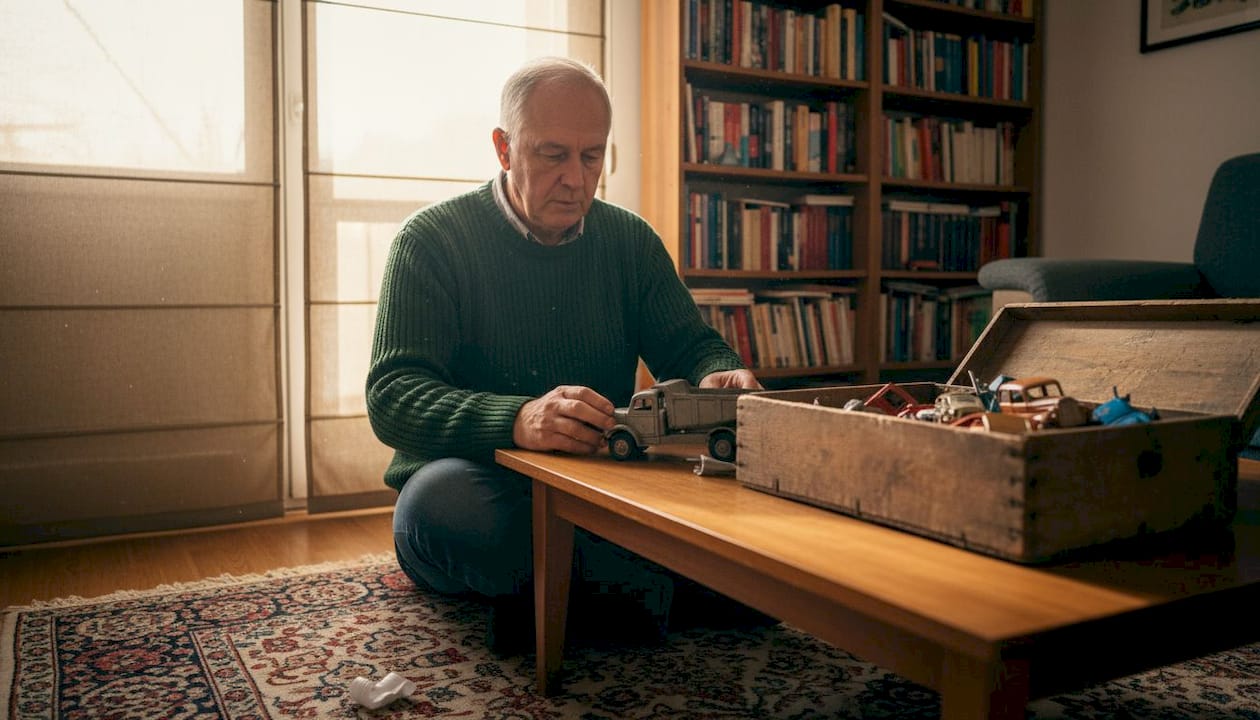
Pro tip: If you're looking at collecting from an investment perspective, focus on limited editions and pieces with documented provenance (i.e., known origin). Their value tends to increase most steadily over time.
The impact of nostalgia is particularly strong among the 50 to 70 age group who played with these trucks in their childhood. But the younger generation is also increasingly interested in retro aesthetics, which further broadens the customer base. A military tipper toy or a retro plush car today is not just a child's toy, but also an ornament and a collector's item at the same time.
Market trends show that with the advent of online auctions, the market has become more transparent, but also more competitive. Collectors now compete globally for rare pieces, which further pushes up prices.
What influences the value of truck collectibles?
Not all old truck-related items are automatically valuable. The price is always based on specific factors that are worth knowing before you buy or sell.
Factors determining value in order of importance:
- Condition: This is one of the most important aspects. Original, undamaged pieces, possibly with their original box, are the most valuable.
- Originality: A piece that has been refurbished later is almost always worth less than an untouched, patinated original.
- Rarity: The fewer copies of a given model exist, the higher its price.
- Brand prestige: Models from certain manufacturers (e.g., Büssing, Tatra, Rába) are inherently held in higher esteem.
- Documentation: Original purchase receipts, boxes, or catalogs can multiply the value.
Original vs. Restored: Comparison
| Aspect | Original, untouched | Restored piece |
|---|---|---|
| Market value | High | Lower |
| Aesthetics | Patinated, worn | Beautiful, like new |
| Collector demand | Very high | Moderate |
| Investment potential | Excellent | Moderate |

Original, unrestored pieces are worth up to ten times more than those refurbished later. This might be surprising at first, but in the collector's market, authenticity is paramount. Patina-like wear, period paint, and original decals all increase, rather than decrease, value.
Pro tip: If you want to restore a piece, think twice. Restoration can increase aesthetic value, but almost always decreases collector's value. It's better to maintain the original condition and only improve storage conditions.
Brand prestige is also not negligible. A Scania or MAN model starts at a higher price than a product from an unknown manufacturer. But trucks from the Eastern Bloc, like Tatra, Rába, or Jelcz, hold a special nostalgic appeal among Central European collectors, which also increases their value.
It's important to mention the value of safety equipment as well: some original factory safety devices, like vintage tachograph parts, have also become collector's items. An original tachograph gear, for example, is not just a part, but a technological relic of an era.
How to start collecting truck memorabilia?
The first step in collecting is always acquiring knowledge. Before spending money, it's worth getting to know the market, the main manufacturers, and the valuation criteria. The good news is that there's a lot of community knowledge available; you just need to find it.
The best places to acquire items:
- Fairs and flea markets: These places still turn up real treasures, often at prices much lower than their true value.
- Online auctions: eBay, Vatera, or Facebook Marketplace regularly offer collector's items.
- Themed exhibitions: At vintage car events, you can not only see but also buy rarities.
- Collector clubs: Members trade among themselves, and the risk of being scammed is minimal here.
- Specialty webshops: Where you can choose from an expert selection.
Veteran museums and exhibitions are not just attractions, but also knowledge bases. If you visit such an event, you'll immediately learn the difference between an original and a reproduction, and you can also connect with experienced collectors.
Pro tip: For your first purchase, always ask for an opinion from an experienced collector before paying a significant amount. A question posted on a forum or in a club can save you from an expensive mistake.
How to avoid fakes:
- Check for period markings and brand inscriptions
- Examine the material quality: old tinplate toys are heavier and thicker
- Inquire about the provenance (where, from whom, when it was purchased)
- Compare it with offerings and prices from other sellers
- If the piece comes in a box, the condition and inscriptions on the box also tell a lot
Beginner collectors should start with smaller, affordable pieces. A Trabant model or a Wartburg model is an excellent entry point because they are relatively common, making it easier to learn the valuation criteria. As you gain experience, you can move on to rarer, more valuable pieces, such as a VW Transporter model from the 1960s.
Bargaining is also an important skill. Always bargain at fairs, but do so respectfully. Sellers usually know what they are offering, but they are more willing to lower the price for a friendly, knowledgeable buyer.
Why isn't the value of truck collectibles just about money?
Many approach collecting purely from an investment perspective, and that's understandable. But if we only look at the price, we lose the essence. The value of a truck collectible is much more than what an auction hammer determines.
An old Rába model evokes a grandfather's truck driving career. A Soviet tinplate toy truck brings back a childhood Christmas. These objects connect generations and carry stories that no money can buy. Nostalgia drives the value: for fans of the 50s and 60s, these are cultural memories, part of their identity.
The spiritual rewards of collecting are also significant. When you search for, find, and bring home an old item, you are actually saving a piece of history. This sense of responsibility and the joy of preservation are something only collectors can truly understand. The community experience, the friendships made at fairs, the stories shared at exhibitions all enrich life.
We believe that the best collection is not the most expensive, but the most personal. The most valuable piece is the one that tells your story.
Collector's experience in a modern environment
The world of collectibles doesn't stop in the past: models are still being created today that will become valuable pieces decades from now. If you want to start or expand your own collection, you'll find the perfect starting point in the Convoy.hu range.
Among the models available on Convoy.hu are the legendary Scania truck model and the precisely crafted MAN TGX model, which are icons of modern truck culture. If you're more drawn to a retro vibe, the VW Transporter T2 model is a classic piece that fits into any collection. The selection is wide, prices are competitive, and you can enrich your passion with a new piece as early as tomorrow.
Frequently Asked Questions
What counts as a truck collectible?
A model, tinplate toy, figurine gift, poster, or any retro truck-related item can be a collectible. Collector's truck models and tinplate toys are considered among the most valuable collectibles.
How do I know if a truck collectible is valuable?
Original condition, a rare manufacturer, a limited series, or excellent preservation significantly increases its value. Original, unrestored pieces are the most valuable in the retro collector's market.
Where should I look for truck collectibles?
Valuable pieces can be found at fairs, online auctions, themed exhibitions, or specialized collector websites. Veteran museums and exhibitions are significant knowledge and relic bases.
How can I distinguish an original from a reproduction?
Original pieces typically show wear and patina, while replicas appear new and often lack period markings or branding. Originality and condition can mean a tenfold difference in pricing.