A unique truck stands out from the crowd on every road, and if the driver is already behind the wheel, why shouldn't they proudly represent their own or the company's image? Many get stuck wanting something special but don't know where to start, what material to choose, or how to avoid common mistakes. A poorly applied film can quickly become bubbly, unsightly, and even damage the bodywork. This guide will show you the entire process from the first design step to a durable end result, whether you do the work yourself or entrust it to a professional.
Table of Contents
- Preparing Truck Decoration: What You'll Need
- Truck Decoration Process Step-by-Step
- Methods and Techniques: How to Achieve a Durable Result
- Common Mistakes and How to Avoid Them
- Why a Professional Approach is Important in Truck Decoration
- Everything Else You Might Need for Truck Decoration
- Frequently Asked Questions about Truck Decoration
Key Takeaways
| Point | Details |
|---|---|
| Preparation Above All Else | A clean, repaired surface and a good plan are the foundation of durable decoration. |
| Step-by-Step Progress | Following the precise process ensures a flawless end result. |
| Durability Depends on Correct Technique | The hinge method and proper heat treatment significantly increase lifespan. |
| Conscious Avoidance of Mistakes | Most damage is caused by poor surface preparation and haste. |
Preparing Truck Decoration: What You'll Need
Preparation is the phase most people skip, and that's precisely why the result is mediocre. Before purchasing any materials, it's worth considering what you want to achieve: applying a smaller logo, full vehicle wrapping, or something in between?
The steps of the process are as follows: first, design planning in line with the corporate identity, then material selection, be it a sticker, self-adhesive film, or full wrapping. This order is not random: if you do it the other way around, the material will dictate the design possibilities, not your creativity.
Required Tools and Materials
Below, we have collected the most commonly used tools and materials:
- Vinyl film: you can choose from matte, glossy, satin, chrome, or textured surfaces
- Self-adhesive stickers: for smaller logos, inscriptions, simpler decorative elements
- Squeegee: essential for removing air bubbles
- Heat gun or heat torch: for curved surfaces, arcs
- Isopropyl alcohol: for degreasing, preparing the film
- Utility knife and cutting mat: for precise edge cutting
- Measuring tape and marker: for accurate positioning
- Gloves: to avoid fingerprints on the film
Good useful truck accessories not only improve aesthetics but also enhance driver comfort and vehicle functionality. When choosing materials, consider that a truck travels hundreds of kilometers daily in various weather conditions, so UV-resistant, waterproof quality is not a luxury but a basic requirement.
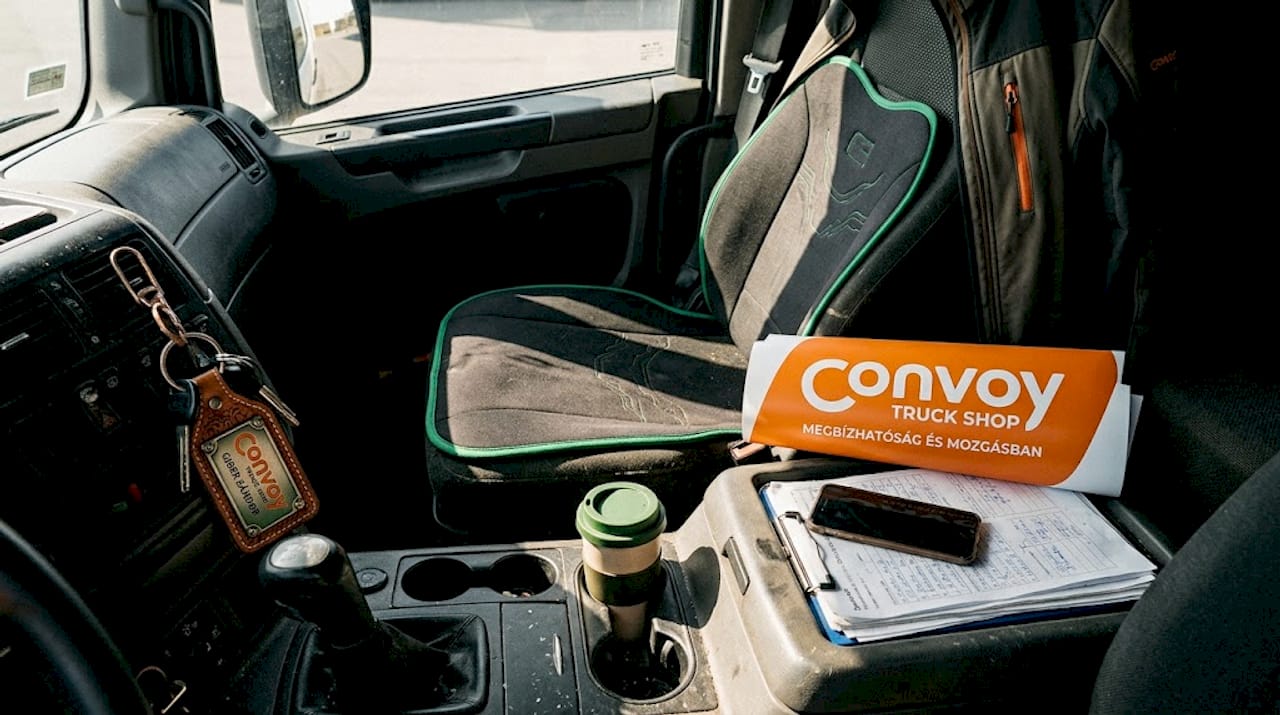
Comparison of Decorative Materials

| Material Type | Use | Expected Lifespan | Difficulty Level |
|---|---|---|---|
| Self-adhesive sticker | Logo, inscription | 2-4 years | Easy |
| Self-adhesive film | Partial covering | 4-6 years | Medium |
| Cast vinyl film | Full wrapping | 6-10 years | Difficult |
| Digitally printed film | Custom graphics | 3-7 years | Medium/Difficult |
If your company also needs personalized gifts for truckers, it's worth considering these during branding to ensure all elements are in harmony.
Pro Tip: Always request a digital preview during the design phase before printing or ordering anything. A color that looks good on screen often looks completely different when printed, especially on a large surface.
Truck Decoration Process Step-by-Step
After reviewing the necessary tools, we will now describe the specific decoration process. Below, we will systematically go through all the important steps so you don't miss anything.
The Full Workflow
-
Design Finalization: Determine the exact dimensions, colors, and placement. Vector file formats (AI, EPS, SVG) are recommended for printing.
-
Surface Preparation: Surface preparation includes thorough cleaning, degreasing with isopropyl alcohol, and repairing any rust spots. This step cannot be skipped.
-
Measurement and Marking: Use a measuring tape to mark the exact position of the film on the vehicle's surface. You can use a small piece of adhesive tape to create temporary reference lines.
-
Film Preparation: Cut the required size piece slightly larger than needed. Trimming later is always easier than trying to fill a missing piece.
-
Film Application: Using the "hinge method" (more details in the next chapter), apply the film, gradually smoothing it down with the squeegee.
-
Air Bubble Removal: Work from the center outwards with even pressure. Smaller, remaining bubbles can be removed by piercing with a needle and re-smoothing.
-
Edge Trimming and Wrapping: Use a utility knife to trim off the excess, then wrap the edges of the film behind the bodywork's rim and secure it with heat.
-
Post-Heat Treatment: Treat the entire surface with a heat gun, especially corners and areas under pressure, to ensure the film is securely fixed.
-
Inspection: Check from the side, top, and back. Small imperfections are easier to fix with fresh film than to revisit later.
Step-by-Step Time Requirement and Difficulty Level
| Step | Estimated Time | Difficulty |
|---|---|---|
| Design Finalization | 1-3 hours | Easy |
| Surface Preparation | 1-2 hours | Medium |
| Film Application (partial) | 2-4 hours | Medium |
| Full Wrapping | 6-10 hours | Difficult |
| Edge Wrapping, Post-Treatment | 1-2 hours | Medium |
If you'd like to read more about truck body repair, it's worth familiarizing yourself with the specific characteristics of different body components beforehand, as these greatly influence which decoration approach is most suitable.
Pro Tip: Never work in direct sunlight. Film applied to a hot surface dries faster and leaves many more bubbles. The ideal temperature is between 15-25°C, in calm, shady conditions.
Methods and Techniques: How to Achieve a Durable Result
After the basic steps of decoration, we will now discuss advanced techniques that help ensure long-term durability. Most amateur decorators lose at this point: the film is applied, but after a few weeks or months, it begins to peel, crack, or curl at the edges.
The Three Most Important Techniques
-
Hinge method: The film is temporarily adhered along a single central line, then both sides are smoothed down simultaneously. This method yields the most perfect results on flat, large surfaces and minimizes the chance of air bubbles.
-
Heat treatment for curves: Heat treatment for curves requires a temperature of 90-95°C for the vinyl to stretch and conform to the curved shape. At higher temperatures, the film can be damaged; at lower temperatures, it won't stretch properly.
-
Edge wrapping: The edges of the film must always be wrapped at least 5-10 mm behind the bodywork's rim. This prevents wind and rain from catching the edge, which is one of the most common causes of peeling.
-
Post-heat treatment: After everything is applied and the edges are wrapped, the entire work needs to be treated with a heat gun. This "fixes" the film's memory, preventing it from retracting to its original shape.
-
Application of overlaminate: For printed films, it's advisable to apply a transparent protective laminate that shields the printed surface from UV rays, scratches, and can double its lifespan.
"The secret to durability lies not in more expensive material, but in the quality of preparation and installation technique. A correctly applied, cheaper film can perform better than an expensive but carelessly installed one."
If both the interior and exterior conditions of the truck are in order, for example, the truck lighting is also correctly adjusted, then the vehicle is not only more beautiful but also safer on the roads. Decoration and functional preparation are not independent areas, but integral parts of a well-maintained, professional truck.
Common Mistakes and How to Avoid Them
After discussing decoration methods, let's look at what mistakes to definitely avoid to prevent a failed outcome. These mistakes are unfortunately very common, especially among those trying wrapping for the first time.
-
Film applied to a dirty or greasy surface: One of the most costly mistakes. The film seemingly adheres well, but starts to peel within a few weeks. The solution is simple: always degrease the surface with isopropyl alcohol before starting work.
-
Choosing a substandard material: Cheap, unknown brand films are prone to early discoloration, are brittle, and difficult to work with. It's worth choosing materials from well-known manufacturers, such as 3M, Avery Dennison, or ORACAL.
-
Incorrect application temperature: In cold weather, the film becomes inflexible, rigid, and easily breaks. In hot weather, it's difficult to handle. Maintaining a temperature range of 15-25°C is not a negligible detail.
-
Skipped edge wrapping: Many are content with simply cutting the film's edge along the bodywork's rim. This looks good initially, but the edge remains unprotected, and at the first heavy rain, it starts to lift.
-
Skipping post-heat treatment: The film is applied, everything looks good, but post-heat treatment is omitted. After a few days, the corners and edges curl up. This step only takes an extra 20-30 minutes but adds months to the lifespan.
-
Using wrong tools: Smoothing a glossy film with a hard plastic squeegee will almost certainly leave tiny scratches. Always use a felt-tipped squeegee for glossy surfaces.
Poor preparation drastically reduces the lifespan of the decoration, which is not just an aesthetic problem: peeling film can potentially damage the paint surface, and the cost of reapplication can exceed the cost of the original, correctly done work.
Pro Tip: If you're trying wrapping for the first time, start with smaller, flat surfaces, such as the bottom of a door or a strip on the edge of the hood. The first few attempts are always instructive, and it's better for mistakes to occur in a less visible spot.
Regular truck exterior maintenance is essential for the decoration to retain its beauty for as long as possible. Decorated surfaces require special attention when washing: strong jets, aggressive chemicals, and automatic washes can all harm the film.
Why a Professional Approach is Important in Truck Decoration
We see every day that truckers and fleet managers primarily consider aesthetics when making decoration decisions. They like a color, a graphic, someone offers a cheaper solution, and the process starts without solid foundations. The result loses its novelty within a few months, and restarting costs more than doing it correctly the first time would have.
Our conviction is that decoration is not just a beautification project. A professionally executed, durable wrap protects the bodywork's paint from UV rays, minor scratches, and can even increase resale value. This means that the investment in time and energy yields more than just aesthetic returns.
Many ask us if it's worth hiring a professional. The answer depends on the size of the area and your experience. Smaller stickers and partial decorations can be done by anyone who is careful and patient. For full wrapping, especially if the vehicle represents the company's image, safety accessories for trucks and visual appearance both demand professionalism, so involving an expert is well worth it.
There's one aspect that few emphasize: precisely executed decoration also has a psychological effect. A driver feels prouder driving a truck that looks neat and refined. Partners and clients also perceive quality when they see a well-maintained, uniquely appearing vehicle. This effect is immeasurable in numbers, yet it offers real business advantages.
Everything Else You Might Need for Truck Decoration
If you've read this guide, you already know that successful decoration requires not just an idea, but also the right materials, tools, and attention to detail. All of these can be found in the Convoy.hu range, whether it's maintenance supplies, accessories, or personalized products.
If you want a special, unique look on the roads, check out our custom trucker towel selection, which can be a great addition to a personalized trucker lifestyle. In the store, you'll find many products that help with daily work, increase comfort, and all serve the purpose of making you proud to sit behind your truck every morning.
Frequently Asked Questions about Truck Decoration
How long does the truck decoration process usually take?
Depending on the extent of the decoration, it can take anywhere from 4-8 hours to a full day. With professional preparation, the work can be done faster and more beautifully.
What is the difference between film and sticker for truck decoration?
Stickers are suitable for smaller surfaces and simple designs, while foil allows for full vehicle wraps, offering much greater design flexibility.
Is a professional needed, or can it be done alone?
Smaller decorations, such as stickers or simpler foil, can be applied at home with precise preparation, but for complex, full wraps, professional involvement is recommended.
What preparation should not be skipped before decorating?
Thorough cleaning, degreasing with isopropyl alcohol, and repairing rust spots are mandatory steps to ensure longevity and should never be omitted.
Why might the decoration peel off or get damaged quickly?
Poor preparation, incorrect material use, and neglected aftercare can all dramatically shorten the lifespan of the decoration.
Recommended
- Truck Body Repair Steps: A Guide for Owners – Convoy Truck Shop HU
- Adjusting Truck Lighting: Steps and Professional Tips – Convoy Truck Shop HU
- Truck Driver Job Guide – 7 Things Every Truck Driver and Carrier Should Pay Attention To – Convoy Truck Shop HU
- Installing Truck Accessories Step by Step for Professionals – Convoy Truck Shop HU