A truck tire is not simply a rubber component that we replace when it's completely worn out. This is the most common and most dangerous misconception in the industry. A neglected tire not only makes the vehicle risky but also endangers the driver, the cargo, and other road users. The truth is that conscious tire maintenance doesn't cost much, but its absence can cost a lot more: in the form of higher fuel consumption, unexpected breakdowns, fines, and serious accidents. This article provides fleet managers and truck owners with accurate, actionable guidance on how to maximize tire lifespan and reduce risk every mile of the way.
Table of Contents
- The Importance of Truck Tires: Beyond a Simple Component
- Regular Inspection and Maintenance of Truck Tires
- Prevention: How to Extend Tire Lifespan?
- What to Do in Case of Truck Tire Damage or Puncture
- What Even Professionals Often Misunderstand in Truck Tire Maintenance?
- The Next Step: Useful Products and Solutions for Truck Tire Maintenance
- Frequently Asked Questions
Key Takeaways
| Point | Details |
|---|---|
| Tire condition = safety | Proper tire maintenance significantly improves road safety. |
| Cost reduction achievable | Regular inspections can measurably cut fleet costs. |
| Prevention is always cheaper | Timely maintenance and cleaning lead to a longer lifespan. |
| Puncture: quick and calm steps | Fast, professional actions prevent further damage and danger. |
The Importance of Truck Tires: Beyond a Simple Component
Many treat tires routinely: they check the tread, and if it's thick enough, they move on. However, this approach only scratches the surface. The tire is the only point of contact between the truck and the road. Every brake, turn, acceleration, and load transfer depends on this few tens of centimeters of contact area.
Think about it: for a fully loaded 40-ton truck, the tires not only carry the weight but also transmit the braking force. If the tire condition is not adequate, the braking distance can increase by up to 20 percent. At 80 km/h, this can mean a difference of more than 10 meters, and that's the distance that can separate you from an accident.
Hidden consequences of neglected tires:
- Increased fuel consumption (up to 3 percent more consumption for underinflated tires)
- Uneven wear, leading to earlier replacement
- Unexpected punctures during transit, causing delivery delays
- Legal liability and failure of technical inspection
- Higher insurance risk and potential fines
„Truck accidents are frequently caused by inadequate tire conditions."
This is not a theoretical risk. In reality, a significant portion of fleet managers only deal with tires when something is visibly wrong. A preventative approach, on the other hand, is not only safer but also more economical.
The condition of the tires also directly affects the stability of the vehicle. Underinflated or damaged tires make steering more difficult, especially on wet roads or during sharp maneuvers. Regular tire inspections are therefore included among the benefits of safety equipment.
An average truck travels 150,000 kilometers per year. If the lifespan of tires can be extended by up to 15 percent with proper maintenance, it can mean a full tire replacement cycle. With four axles and 8 tires, this amounts to a significant sum. It's not an additional investment but a fundamental business decision.
Regular Inspection and Maintenance of Truck Tires
Most tire failures could have been prevented. This is not an assumption but a recurring lesson from fleet operation experiences. Thoughtful maintenance can result in up to 30% cost reduction annually for fleets. So the question is not whether it's worth dealing with tires, but exactly how.
Key steps of regular maintenance in order:
- Tire pressure check: Before every departure, or at least once a week. Measure on cold tires, as warm tires show a higher pressure reading, which can be misleading.
- Tread depth measurement: The legal minimum is 1.6 mm, but experts recommend replacement below 3 mm for trucks. Use a depth gauge, don't just estimate visually.
- Visual inspection: Cracks, bulges, embedded objects (nails, stones), sidewall damage. These often aren't immediately visible but can quickly become severe.
- Wheel rotation and balancing: Due to uneven loading, some tires wear faster. Periodic rotation balances the wear.
- Seasonal check: Different pressure values are needed in winter and summer, and the tire material behaves differently at extreme temperatures.
| Maintenance task | Recommended period | Estimated time requirement |
|---|---|---|
| Tire pressure check | Daily / weekly | 5 minutes |
| Visual inspection | Weekly | 10 minutes |
| Tread depth measurement | Monthly | 15 minutes |
| Wheel rotation and balancing | Every 50,000 km | 1 hour |
| Full tire overhaul | Semi-annually | 30 minutes |
One of the most common mistakes is underinflated tires. This is particularly dangerous because it's not always visible to the naked eye. An underinflated tire's internal temperature rises, leading to faster material aging and internal structural damage. A 10 percent lower pressure can reduce tire life by up to 15 percent.
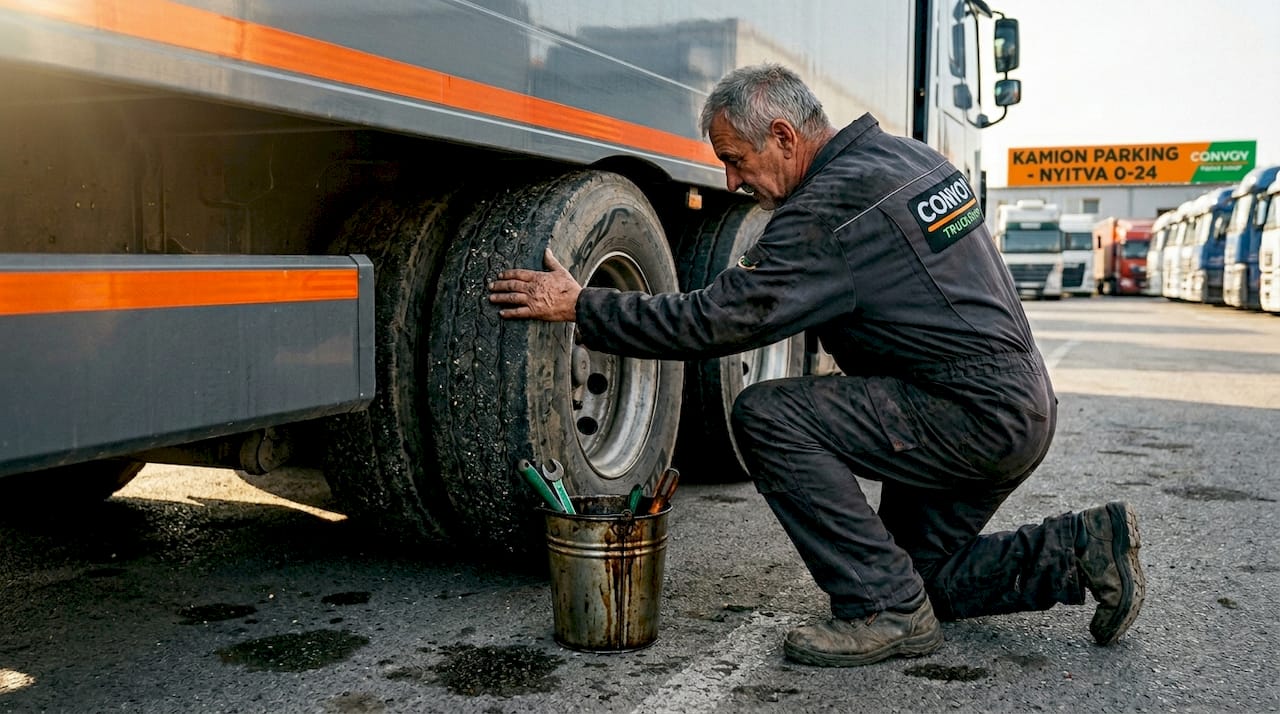
Pro tip: Keep a tire log for each vehicle. Record measured pressure values, tread depth, and visual inspection results. This not only aids maintenance but can also provide legal protection in case of an accident investigation.
The external maintenance of a truck is also closely related to the condition of its tires: dirt, salty road chemicals, and other chemicals also damage the tire sidewalls. Servicing and cost reduction are interconnected, and this is especially true for tires, where the cost of prevention is a fraction of the cost of managing the consequences.
Prevention: How to Extend Tire Lifespan?
Maintenance is a reactive process: you notice a problem, you address it. Prevention is proactive: you create conditions under which problems develop more slowly. The combination of the two yields the best results.
Tire lifespan is influenced by three main factors: load, road conditions, and driving style. All three can be consciously managed.
Effect of load: Overloading is one of the fastest ways to wear out a tire. If an axle consistently operates at or above its nominal load limit, the internal structure of the tire degrades rapidly. Even load distribution is not only good for the tires but also for the suspension and running gear.
Effect of road conditions: Poorly paved, potholed, gravel roads physically wear and damage tires. If the route can be planned, it's worth considering road quality. Where possible, avoid unnecessarily poorly paved sections.
Effect of driving style: Hard braking, sharp cornering, and sudden accelerations all accelerate tire wear. Economical and anticipatory driving style not only saves fuel but also increases tire lifespan.
| Preventative method | Estimated cost | Time requirement | Return on investment |
|---|---|---|---|
| Regular washing and cleaning | Low | 20 minutes | Longer sidewall lifespan |
| Even load distribution | Zero | Planning time | 10-15% longer wear |
| Periodic tire rotation | Low | 1 hour | Even wear |
| Pressure monitoring system | Medium | Installation time | Immediate ROI |
| Economical driving style | Zero | Training time | 5-10% lifespan increase |
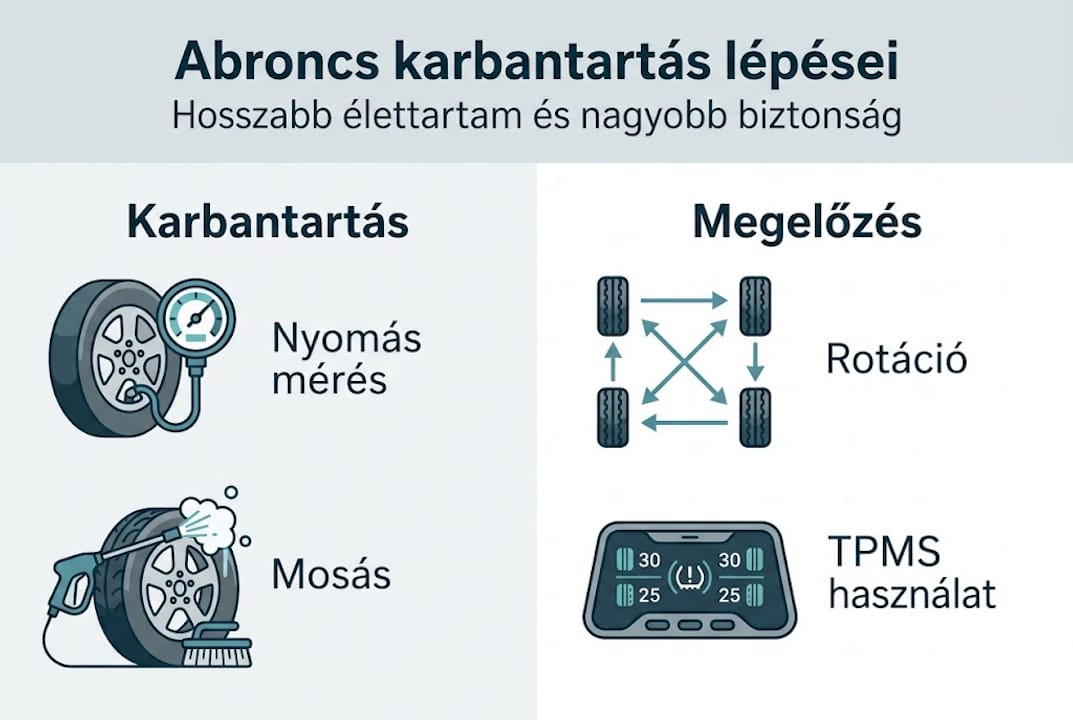
Regular cleaning and proper load distribution increase tire lifespan. This isn't marketing speak, but physical reality: dirt and chemicals seep into the tire rubber, weakening the material from within.
List of specific preventative steps:
- Regular washing, especially in winter to remove salty road chemicals
- Installation of a Tire Pressure Monitoring System (TPMS), if not already present
- Wheel balancing and alignment check every six months
- Proper storage of tires (if spares are available)
- Thorough inspection of tires during seasonal changes
Pro tip: Automated Tire Pressure Monitoring Systems (TPMS) indicate pressure changes in real time. Many fleets have seen a 20 percent reduction in tire failures after installing these systems. If you're not using it yet, it's worth serious consideration.
Among external maintenance tips, tire care always features prominently, and for good reason. The tire is the only component that is in continuous direct physical contact with the road.
What to Do in Case of Truck Tire Damage or Puncture
Despite the best prevention, punctures are always possible. The question is not whether it will happen, but whether you are prepared to handle it. Panic and haste are most dangerous at such times.
First steps in order:
- Stay calm and hold the steering wheel. In case of a puncture, the vehicle will pull in the direction of the affected wheel. Do not jerk the steering wheel, but gradually slow down.
- Stop in a safe place. Preferably in a hard shoulder, parking lot, or roadside, far from traffic.
- Turn on the hazard lights immediately. Make the vehicle visible before you even get out.
- Place the warning triangle. At least 100 meters behind the vehicle, 200 meters on motorways.
- Inspect the tire thoroughly. See what caused the damage.
Types of damage and actions:
- Embedded nail or screw: If the nail is still in and the tire hasn't completely deflated, it can be temporarily treated with a tire repair kit. If it's completely flat, replacement is necessary.
- Sidewall damage: This can never be repaired. Sidewall damage requires immediate replacement because the structural integrity of the tire is compromised.
- Bulge (bubble): Immediate replacement is also required. A bulge indicates internal structural damage and can lead to a sudden blowout at any time.
- Tread damage: Smaller cuts, gashes can be repaired, but professional inspection is recommended.