Choosing the right truck driver apparel is about much more than one might initially think. It's not enough for a jacket to merely protect from rain, or for pants to simply be durable. Both professional drivers and fleet managers need to find clothing that is comfortable all day, complies with occupational safety regulations, and can withstand the rigors of the road. In this article, we'll cover the most important aspects, materials, and types, and help you know exactly what to look for on your next purchase.
Table of Contents
- Key Considerations for Choosing Truck Driver Apparel
- Main Types: Waterproof and Dirt-Resistant Clothing
- Ergonomic Apparel: Freedom of Movement Day After Day
- Specialized Protective Clothing: Gloves, Accessories for Loading
- Comparison of Types: When to Choose Which?
- From Experience: What Do Most People Overlook When Choosing Truck Driver Apparel?
- Where to Get the Best Truck Driver Apparel for Driving?
- Frequently Asked Questions
Key Takeaways
| Point | Details |
|---|---|
| Safety and Law | Workwear is a legal requirement and a fundamental element of accident prevention in transportation. |
| Main Material Types | Polyester-cotton blends, combined with Cordura inserts, are the most effective for durability and comfort. |
| Ergonomic Advantage | Ergonomically designed and breathable workwear significantly enhances comfort, especially on longer journeys. |
| Gloves for Loading | The material, design, and protection of appropriate gloves are essential for safe loading. |
| Considered Decision | Comparing types helps in selecting the most suitable truck driver apparel for one's needs. |
Key Considerations for Choosing Truck Driver Apparel
Truck driver workwear is not the same as an office suit or a retail uniform. A truck driver's day is incredibly varied: sitting in a heated cabin in the morning, entering a cold storage facility at noon, and securing cargo in the rain in the evening. In such conditions, clothing must simultaneously protect, provide comfort, and not restrict movement.
Why is truck driver workwear different?
Traditional workwear is typically made for a specific task in a defined environment. In contrast, truck driver apparel must perform well in multiple situations daily. The hours spent in the cab, the constant changes in weather conditions, and the physically demanding loading tasks all place different demands on the clothing.
The best truck driver apparel is built on three pillars: protection, durability, and comfort. All three carry equal weight. A super-cheap overall that falls apart after two months actually costs more than a quality piece that can be worn for years.
It's worth consciously considering the important aspects before purchasing:
- What weather conditions do you work in most frequently?
- Is there regular loading work that requires physical protection?
- Are reflective elements needed for road safety?
- What is the temperature fluctuation within a workday?
- What cleaning requirements arise?
"Good workwear is like a reliable tool: you don't notice it until it works perfectly, but you immediately miss it if it's poor quality."
Legal Background and Risk Assessment
In Hungary, Act XCIII of 1993 on Occupational Safety and Health mandates that employers provide necessary personal protective equipment based on a risk assessment. This applies fully to the transportation sector: wearing protective clothing is mandatory in transportation based on risk assessment. If you work as a fleet manager, it's particularly important to understand the legal requirements of transportation to help the company avoid fines and accidents.
Risk assessment is not just a bureaucratic obligation. It helps to accurately determine what type of protective equipment is needed for a given job and what level of protection must be provided.
Main Types: Waterproof and Dirt-Resistant Clothing
Now that we've covered the general expectations, let's move on to the most common types of apparel. Waterproof and dirt-resistant items form the foundation of a truck driver's wardrobe, especially for those who regularly work outdoors, load cargo, or handle tarpaulins.
The World of Materials
A waterproof overall is one of the most useful items of clothing for protection against rain, cold, and dirt. But not all waterproof overalls are equal. The quality and composition of the material fundamentally determine what you can expect in the long run.
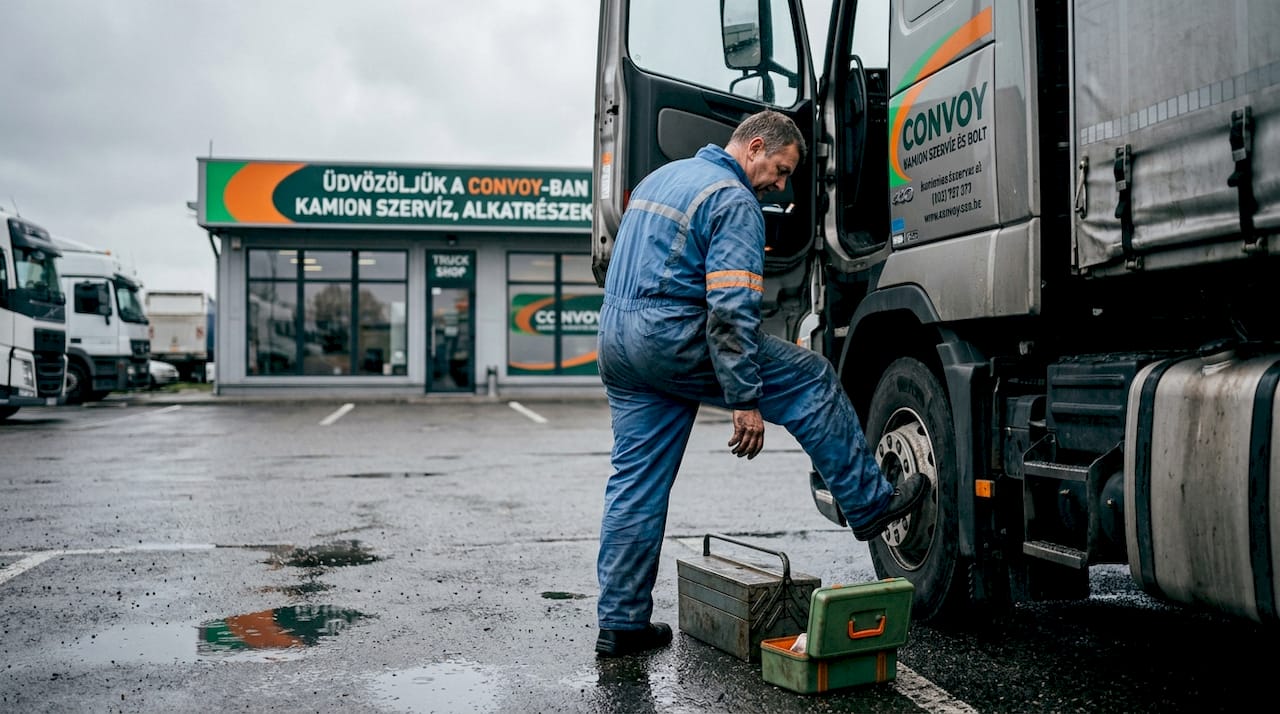
The most common material combinations:
| Material | Advantage | Disadvantage | Typical Use |
|---|---|---|---|
| 65% Polyester, 35% Cotton | Abrasion-resistant, breathable | Moderate water resistance | Everyday wear |
| 100% Polyester | Excellent water resistance | Less breathable | Rainy weather |
| Cordura-reinforced combination | Exceptional durability | Heavier material | Heavy physical labor |
| Stretch cotton mix | Outstanding comfort | Less durable | Long driving days |
The polyester-cotton blend is abrasion-resistant and breathable, while Cordura inserts provide extra durability for reinforcement. Cordura is a specially woven nylon-based fabric, originally developed for military equipment, and used on the most heavily worn parts of clothing, such as the knees and elbows.
Functional Details That Really Matter
A good waterproof jacket or overall is not only recognized by its material. Reinforced construction at the seams, taped or stitched waterproof zippers, and shaped cuffs all serve the purpose of keeping you dry in the rain.
- Reinforced seams at the shoulders and knees
- Waterproof zipper or snaps around the neck
- Adjustable cuffs and waist
- At least four pockets, including one zippered inner pocket
- Reflective strips for safety, especially during night and dusk work
Pro tip: If possible, choose an overall where all seams are taped, not just the outer layer is waterproof. Internal seam leakage is one of the most common complaints with cheaper items.
The importance of breathable clothing is particularly evident in summer, when the combination of heat and work can be seriously taxing. A good quality, breathable shirt or shirt-like top prevents overheating in the cab and during loading. The range of truck driver apparel is now available in almost every style and function.
Ergonomic Apparel: Freedom of Movement Day After Day
After waterproof and durable clothing, it's important that comfortable movement also plays a role in the selection. During a long workday, a driver spends hours in the cab, but also needs to get on and off the truck, secure cargo, and sometimes access cramped storage areas. All of this requires freedom of movement.
The Secret of Ergonomic Design
Ergonomic tailoring provides freedom of movement during both driving and loading, while functional pockets allow tools to be kept close at hand. This is not marketing speak: traditional straight-cut trousers, for example, can feel tight when climbing the truck steps or squatting to check cargo.
Characteristics of ergonomically designed truck driver apparel:
- Shaped knee area: Extra material around the knee prevents the garment from pulling when squatting and climbing.
- Adjustable waistband: Allows for fine adjustments when eating, sitting for long periods, or doing physical work.
- Raised back part: The back of the trousers extends higher to prevent the lower back from being exposed when bending over.
- Stretch inserts: Flexible fabric strips placed in the crotch, behind the knee, and in the side seams dramatically improve freedom of movement.
- Adjustable cuffs: Adjustable solutions at the wrists and ankles prevent the jacket or trousers from riding up during work.
"In good trousers, you should be able to move as if you weren't wearing work trousers at all. If you're constantly thinking about your clothes, something is wrong."
Correct Selection of Size and Fit
Many people make the mistake of buying work trousers in a smaller size, saying "they'll stretch anyway." The opposite is true: premium work trousers do not stretch out, but rather conform to the body's shape and maintain their elasticity. Always choose based on your actual measurements, and if you are between standard sizes, choose the larger one.
Among driving and comfort tips, it's also worth researching how clothing affects posture and lower back pain. Poorly fitted trousers can lead to significant spinal strain after long hours in the cab. Practical truck accessories and clothing together form a complete system, where every element matters. When choosing useful everyday tools, this ergonomic approach also provides the right direction.
Specialized Protective Clothing: Gloves, Accessories for Loading
In addition to ergonomics, it's worth paying attention to specialized protective equipment designed for loading. Gloves are one of the most underestimated work tools, yet hand protection is critically important for both safety and efficiency.
Materials and Types of Gloves
Work protective gloves are an indispensable protective tool for loading. But which type should you choose? The comparison below will help you navigate:
| Glove Type | Material | Strength | Weakness | Best Use |
|---|---|---|---|---|
| Leather work gloves | Cowhide | Durable, good grip | Stiff, slippery when wet | Loading, tarp handling |
| Split leather | Leather scraps | Inexpensive, reasonably durable | Shorter lifespan | Occasional heavy work |
| Synthetic fiber gloves | Nylon, polyester | Lightweight, breathable | Less durable | Light loading, summer |
| Combined gloves | Leather and flexible material | Comfort and protection | More expensive | All seasons |
The level of protection for gloves is not uniform. The EN 388 standard uses a four-digit code to indicate glove properties: abrasion resistance, cut resistance, tear resistance, and puncture resistance. For professional loading, an EN 388 rating of 3-1-3-1 or better is required.
When to Choose Thicker or Thinner Gloves?
This question is not as simple as it first seems. Thick, rigid gloves provide better protection but reduce sensitivity and precision. For example, when handling the buckles of tie-down straps, thinner but flexible gloves allow for faster and more accurate work.
- In cold, wet weather: thicker, insulated gloves, with an inner warming layer
- For summer loading: thin, breathable synthetic material, with a non-slip palm
- For tarp changes, strap handling: medium thickness, combined leather-nylon
Pro tip: Don't skimp on gloves. A cut or bruise on your hand is not only painful but can keep you out of work for days or weeks. The cost of a quality pair of gloves is negligible compared to the lost work time from an injury.
Useful Accessories for Loading
Useful truck accessories include those small but important items that many people omit from their list: knee pads, reflective vests, and lumbar support belts. Knee pads are particularly important if the driver regularly performs trailer coupling tasks or squats in cramped warehouses. Reflective vests are now mandatory in many ports, logistics depots, and on public roads, and can literally save lives at night.
Comparison of Types: When to Choose Which?
After the detailed type descriptions, it is worth providing a comprehensive, simple comparison. The table below will help you quickly find which type of clothing best suits a given situation.
| Apparel Type | Best Weather | Main Function | Material | Value for Money |
|---|---|---|---|---|
| Waterproof overall | Rain, mud, cold | Full body protection | 100% polyester | Excellent |
| Waterproof jacket | Moderate rain | Upper body protection | Polyester, hooded | Good |
| Ergonomic trousers | All seasons | Freedom of movement | Cotton-polyester mix | Excellent |
| Insulated winter overall | Cold, frost | Warmth and protection | Cotton, fleece lining | More expensive, but necessary |
| Summer work trousers | Warm, dry | Breathability | Light cotton | Excellent |
| Softshell jacket | Wind, light rain | Wind and precipitation protection | Stretch fabric | Good |
Statistical Background for Decision Making
The advantage of polyester-cotton blends is their durability and breathability, which are highly recommended by European occupational safety organizations in transportation environments. Research shows that professional protective workwear can reduce the number of minor workplace injuries by up to 40% compared to those who wear inappropriate clothing.
If you are purchasing as a fleet manager, it is important to remember that a higher initial investment in premium clothing will pay off in the long run. A good quality overall lasts two to three times longer than a cheap version, and the driver also works more comfortably and safely. This is not just a matter of occupational safety, but also of productivity. A more motivated driver, working in comfortable clothing, makes fewer mistakes and takes sick leave less often.
On our tips for truck driver apparel page, you will continuously find updated content on the latest materials, occupational safety trends, and practical experiences.
From Experience: What Do Most People Overlook When Choosing Truck Driver Apparel?
Over the years, we've gathered a lot of feedback from both drivers and fleet managers, and a pattern emerges again and again: most people look at the price first, and only after the second or third worn-out garment do they truly start looking for quality.
This is understandable. People naturally look for cheaper solutions, especially if someone is paying out of their own pocket. But with truck driver apparel, this logic surprisingly quickly backfires.
The True Cost of Cheap Clothing
Consider this: a 4,000 HUF overall that tears after three months needs to be replaced four times a year. That's 16,000 HUF annually. A quality overall costing 14,000 HUF, however, can last two to three years with proper care. Add to this the fatigue caused by discomfort, potential minor injuries, and the fact that poor-quality clothing doesn't provide warmth in the cold or proper protection in the rain.
Experienced drivers usually know this precisely. Someone who has spent ten years in the cabin no longer buys cheap gloves just because they cost three euros less. Precisely because they have already experienced what it means to tie down cargo in cold, wet gloves at minus five degrees Celsius at dawn.
What Most People Miss from Their Checklist
After price and material, the third most common mistake is neglecting size and cut. Many people buy clothing in their usual size, disregarding that they will be wearing a thick sweater under a winter overall. Or, conversely: they buy a large size because "it should be comfortable," and then the loose material gets caught in the cabin door frame or the cargo.
Another typical mistake is underestimating reflective elements. Most drivers think about daytime, but in the morning and evening hours, in fog, or rain, reflective strips play a critical role in visibility and, consequently, their own safety.
Avoiding fundamental mistakes in truck driving work is not only about clothing, but choosing the right clothing is one of the most preventable problem-causing factors in the profession.
In our opinion, the best investment is to thoroughly consider your actual needs once and then purchase accordingly. Don't think in terms of product categories, but in situations: what do I do in the morning, what at noon, what do I need in winter, what do I wear in summer? If you have the answers to these, finding the right clothing almost comes naturally.
Where to get the best truck driver clothing for driving?
Now that we've covered the types and experiences, let's see where you can get the best products. Convoy Truck Shop has been serving domestic and European transporters for over 30 years and offers one of the widest selections of specialized truck driver workwear.
All the main types, materials, and accessories mentioned in the article are available in our webshop. For example, if you are looking for comfortable work trousers with an ergonomic cut, or safe gloves for loading, you will find them in the right size and design. The complete range of truck driver clothing is constantly expanding to meet current safety and comfort requirements, and you can order everything you need with fast home delivery. If you are unsure which product to choose, our colleagues will help you find the ideal solution.
Frequently Asked Questions
Why is certain protective clothing mandatory for truck drivers?
Regulations based on risk assessment mandate the wearing of protective clothing in transportation, which the employer is obliged to provide in accordance with the relevant legal provisions.
What material is the best choice for truck driver clothing?
A polyester-cotton blend is wear-resistant and breathable, and with Cordura inserts, it's even more durable, making this combination optimal for most truck driving situations.
Which type of clothing is best for long-haul driving?
An ergonomic cut provides freedom of movement during both driving and loading, so for long days, stretch-panel, well-ventilated ergonomic trousers and a light top are the best choice.
What should I look for when buying gloves as a truck driver?
The most important factors are grip, strength, and hand protection level, as work safety gloves are essential for loading, and different products can be easily compared based on EN 388 standard markings.
Is there a difference between seasonal clothing?
Yes, winter and waterproof types are needed in wet, cold weather, while in summer, breathable, light clothing is ideal, as incorrect seasonal choices negatively affect both comfort and performance.